Winter care
How to dry snow boots overnight and keep the lining warm
Water-resistant boots still get damp inside. Here is how to get the faux fur lining dry by morning without heat, and keep it soft.
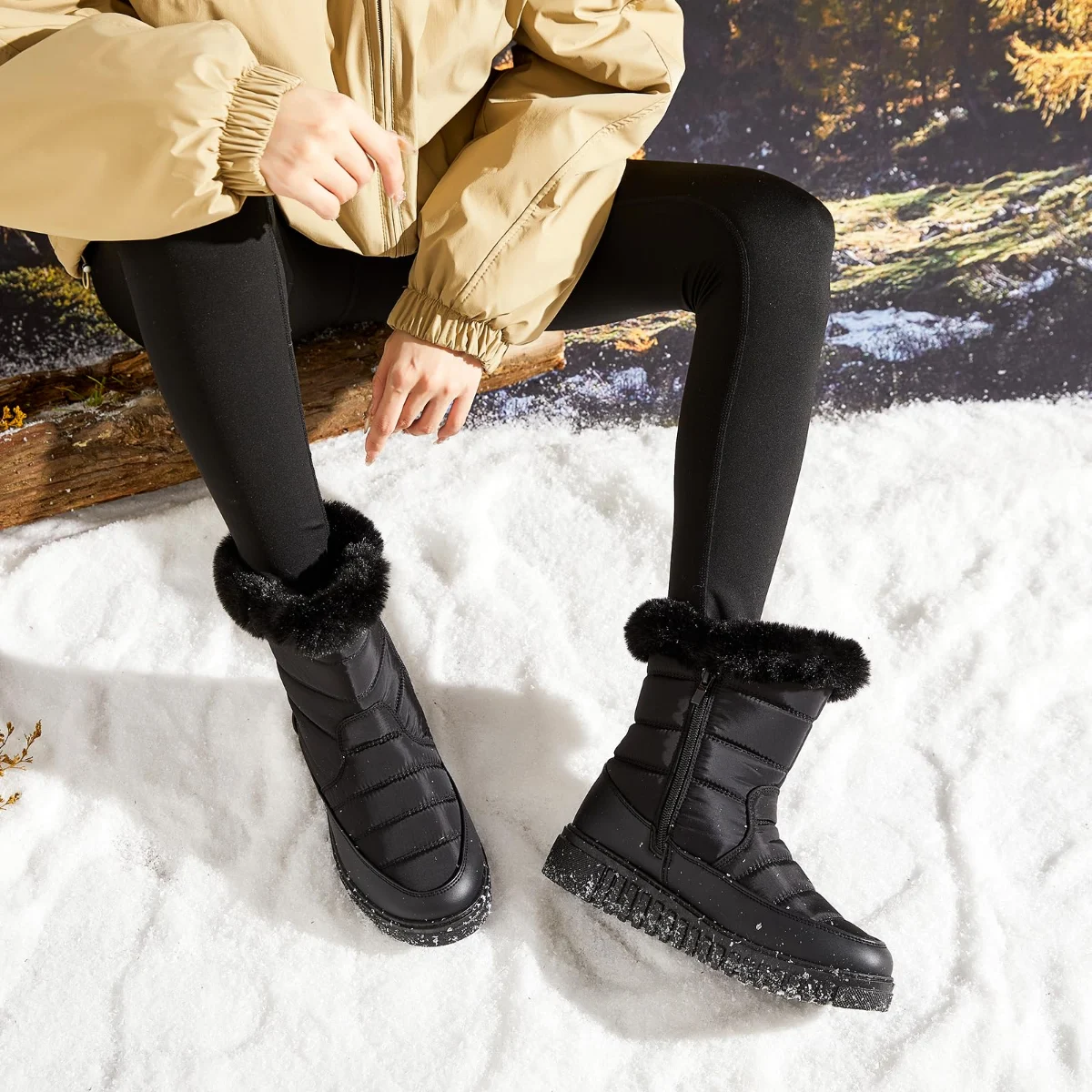
Water-resistant is not waterproof
Both of our winter boots, the ankle boot and the mid calf boot, have an upper made of water-resistant synthetic leather. That surface sheds rain and slush: walk to the bus through a wet morning and the water beads and runs off instead of soaking in.
What it will not do is keep water out forever. A boot has stitched seams, a zipper running up the side and a join where the upper meets the sole, and water that sits against those long enough finds a way through. Standing in a puddle, wading through deep wet snow or spending an afternoon in slush will leave the lining damp. We do not sell these boots as fully waterproof, and it is better to know that before the first storm than after it.
As soon as you get home
Knock the snow off before you come inside. Tap the soles together on the step, and brush any snow off the top of the shaft so it does not melt down into the lining.
Road salt is the next job. It dries into white, crusty lines on synthetic leather, and the longer it sits the harder it is to wipe away. Take a cloth dampened in plain water, wipe the whole upper, and pay extra attention to the area around the toe and the bottom of the zipper, where slush splashes first.
Then open the side zipper all the way down. On both boots the zipper is the biggest opening you have, and a boot left zipped traps warm, damp air inside it all night.
Drying the faux fur lining
Crumple sheets of plain paper into loose balls and push them down into the toe and up into the shaft. Paper pulls moisture out of synthetic fur and holds the shape of the boot while it dries. Use plain paper or paper towels rather than printed newspaper, since wet ink can rub off onto a pale lining, which matters most if your boots are white or beige.
After an hour or two, take the paper out. If it feels damp, replace it with fresh paper and leave the boots for the night. Stand them upright on a rack or on a folded towel, somewhere with air moving around them. By morning the lining should feel dry to the touch all the way down to the toe.
What not to do
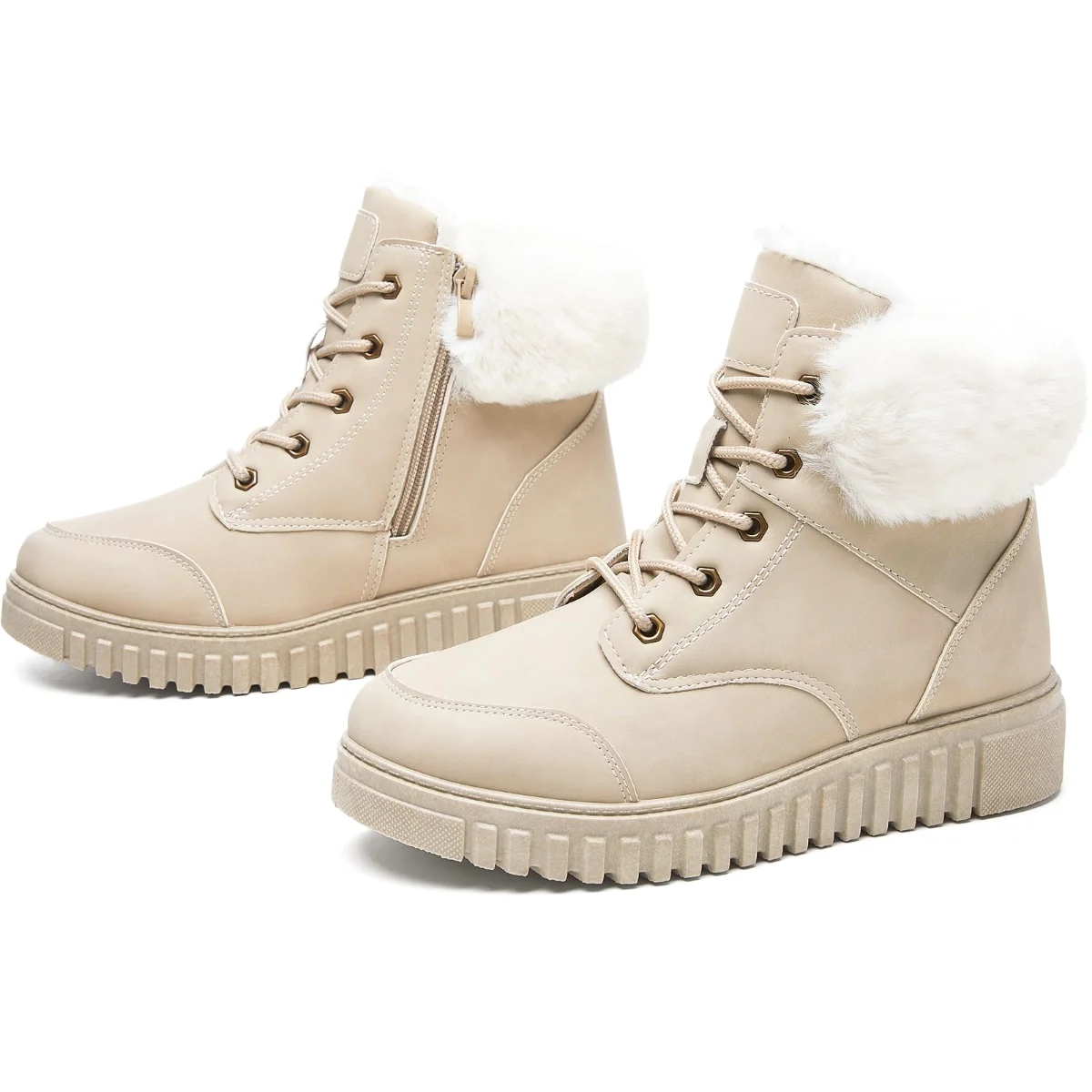
It is tempting to speed things up with heat. Do not. Keep the boots away from radiators, space heaters, fireplaces and heat vents, and do not aim a hair dryer at them on a hot setting.
Direct heat can warp synthetic leather, stiffen the fur lining, and weaken the glue that holds a boot together, and the damage does not show until the boot starts to separate weeks later. A clothes dryer is worse: heat plus tumbling against a metal drum can knock a boot out of shape in a single cycle.
Keeping the fur soft
Once the lining is completely dry, it may look a little flat or clumped where it was wet. That is normal, and it comes back with a minute of attention.
Run your fingers through the fur to separate the fibers, working from the toe up toward the top of the shaft. For a deeper fluff, a soft clothes brush works well. Go gently, and stop once the fur looks even again, since hard brushing pulls fibers out.
A soft, lofty lining does more than look nice. The warmth comes from the air trapped between the fibers, so fur that is matted flat has less of it.
Before the next snow
Make sure the boots are completely dry before you put them away, even for a few days. A lining stored damp starts to smell, and it can flatten in the shape of whatever is pressing on it.
Close the zipper for storage. For the mid calf boot, put something inside the shaft to keep it standing: a rolled towel or a loose bundle of paper does the job. Keep the pair somewhere cool and dry, out of direct sun, and they will be ready when the forecast turns.
Our boots come in US women's sizes from 6 to 11, with some half sizes. If your pair feels tight with winter socks, see our size guide before you order the next one.